Showing posts with label lighting. Show all posts

Thursday, 3 December 2015

More lamps in manuscripts

[This post belatedly released from the blog post draft archive]
This is a continuation of this post, a survey of lamps, with more entries. Almost all reinforce the same regional stylistic preferences seen last time. (of course it's still not enough examples to really say)

Austria
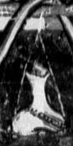
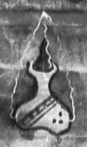
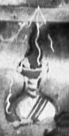
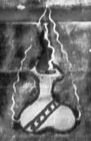
The lamps are the same funny shape as the previous examples.

Admont Bible

Salzburg, Austria, c1140's (Österreichische Nationalbibliothek, Wien. Cod. ser. nov. 2701 and 2 pages in École Nationale Superieure des Beaux-Arts, Paris. PC 22788)

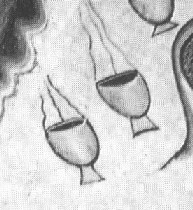
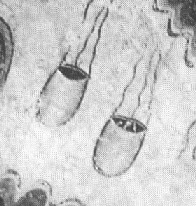
First two lamps from the story of Hoshea (2 lamps, Paris leaf)
2 more lamps from f252v (main Vienna section) The affliction of Job


Prüfening (Regensburg), Austria 1170/1180. (München, Bayerische Staatsbibliothek, Cod. lat. 13074."Vitae et passiones apostolorum" folio [90v])


Germany


sicily


Sicily, 1196 (Liber ad honorem Augusti sive de rebus Siculis by

Petrus de Ebulo, MS. 120 II Berne Municipal Library.)

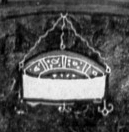
Lamps from a church in mourning for William, the sickroom (presumably bedroom) where  William II dies and lamps in the bedroom of Roger II (who appears to be sick in bed) respectively. See also another similar lamp in this manuscript.

It's possible these are incense burners/censers rather than lamps. They are different to the type swung by hand (see the death of William scene, where i think that is what the central figure is doing), but they may be a different fixed type.


Italy

Same gorgeous shape as before. Again with 3 handles on the side to attach chains to. Now that I look more closely at the first Italian example, I can see a pouring lip on the lamp


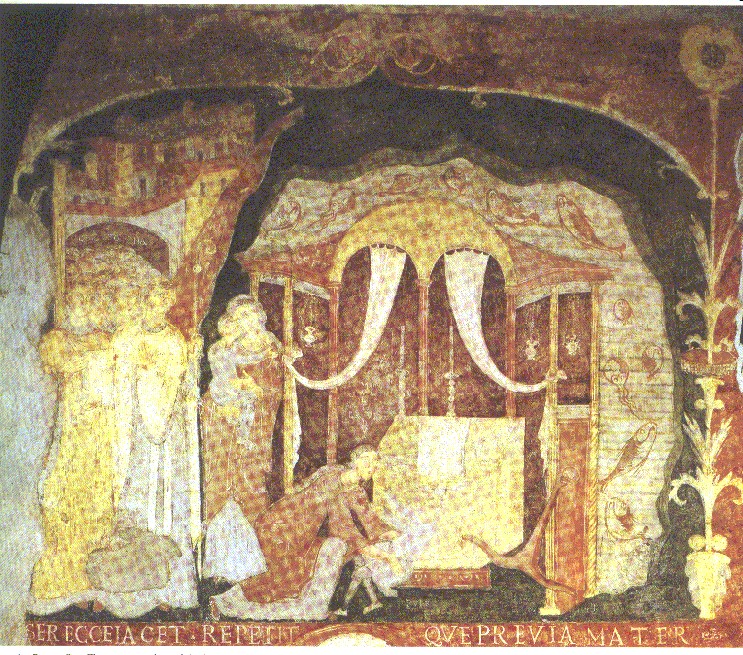
Basilica of Saint Clement, Rome, (Italy) end of the 11th century.

This wall painting appears to be a scene taking place in a church.
(thanks Katherine for finding this on a page that has nothing to do with the topic, and would never had been found otherwise)


1136 Fondi, Italy (Arrestation du Christ, "exultet"  Bibliothèque nationale de France, Département des Manuscrits, Division occidentale Ms Nouvelle acquisition latine 710, fol. rouleau, )

This manuscript is a scroll not the usual book. To view, use mandragore and in the box "cote" type/paste: "Nouvelle acquisition latine 710" and then hit the button "chercher".


Austrian manuscript paining is supposed to be heavily byzantine influenced through an Italian filter. But the lamps remain stubbornly different, so I suppose it's a regional preference.


England


England, N. (Durham), last quarter of the 12th century (Bede "The Life of Cuthbert" f 79, 83 and 74. British Library Ms Yates Thompson 26/Add ms 39943)


England, about 1200 (Westminster Psalter fol. 13 v, seated Virgin with child. London, British Museum. Royal Ms. 2A. XXII.)

Although some date other pages to 1250, this should be a c1200 one.


Friday, 1 December 2006

Austrian lamps are a different shape!

Austrian lamps
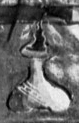
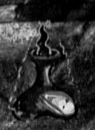
Several sets of lamps in this manuscript have an unusual shape - baggy rather than tapered at the bottom like this. I guess this shape would work well enough, but the tapered shape works superbly as a hanging lamp (it sort of self balances). The chains the lamps hang from seem to attach near the bottom of the lamp, so I assume they pass under the baggy bits (presumably there are 3 of them) or there is a fastening at the side that we can't see.


(in order) Fol. 13 (2 lamps), Fol. 27, Fol. 37v (3 lamps) Fol. 39, Fol. 56 (2 lamps), Fol.68, Fol.102v. Periscope book, Saint Erentrud Abbey, Salzburg around 1140 (München, Bayerische Staatsbibliothek, Cod. lat. 15903)

And from annother Austrian manuscript:
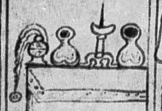
De Laudibus sanctae Crucis, Regensburg c1170/75 (Bayerische Staatsbibliothek, ms. lat. 14159) fol 4v

From the same page, left to right: censer, lamp, candlestick, lamp sitting on an altar in a church.

Now that my preconception about lamps being just one shape is broken, I'm going to do a survey of lamps by geographical location.

Lamps from other places

France

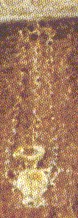
Stained Glass window, Chartres Cathedral, 12th C?
We can see the chains on the lamp, I'm not sure why there is a bowl below the lamp. (there shouldn't be drips to catch).

Complete picture somewhere on this section of artserv.


England
copenhagen psalter England, 1175-1200 (Kongelige Bibliotek, MS Thott 143 2º) .f9v
Yes, the lamp is hovering in mid air, I assume the artist never got back to draw in the strings.


winchester psalter Winchester (Priory of St Swithun or Hyde Abbey); between 1121 and 1161(British Library MS Cotton Nero C IV) f10 Nativity.


St Albans Psalter, St Albans c.1131
p50. The Three Women at the Sepulchre, p48. The Entombment, p28. The Presentation at the Temple


The chains on these lamps are drawn as attached to the middle of the body of the lamp, not the top as in the other english examples.


1160-70 Winchester Morgan Library 619 Scenes from the life of David and Samuel

There appears to be a single chain with a blob on the end hanging down below the lamp. This might be some device to allow lowering of the lamp maybe?


Italy
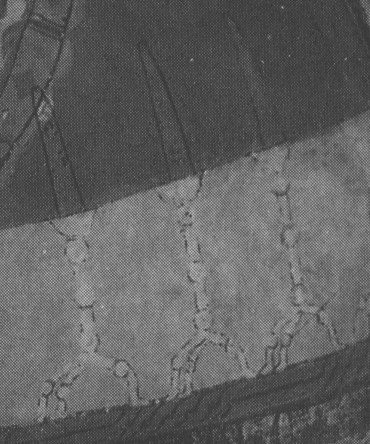
Rome, San Clemente, narthex of the lower church, Miracle at the tomb of St Clement. Wall painting. 1084/1115

What a lovely shape of lamp. Or it could be some kind of censer I suppose, but why would you have 3 of them? You can also just make out some kind of bar or disc where the chains meet and then attaches to the ceiling with one chain.


Spain

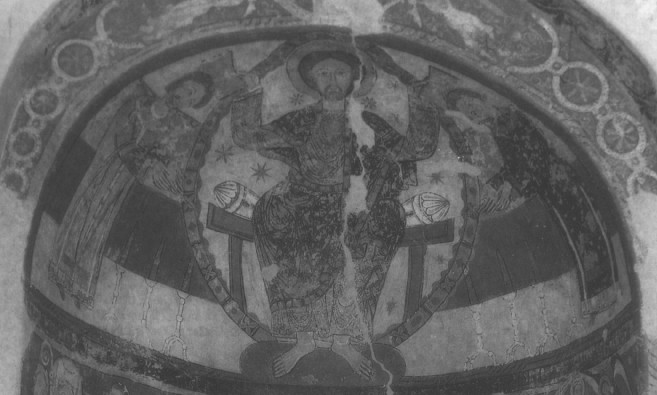
Santa Maria de Mur, apse, Christ in Majesty. Wall painting. Mid twelfth century(?). Boston, Museum of Fine Arts

Spain (Catalonia)

These ones contrast with the lamps from the st Albans psalter by having their chains attached at the top rim of the lamp.


Conclusion

Send me more examples of 12th C lamps so I can make a better survey. But I can say for now that there are a lot more shapes of lamp above than I expected, even in English examples.


And while we are on the topic of lighting.....

candlesticks

Periscope book, Saint Erentrud Abbey, Salzburg around 1140 (München, Bayerische Staatsbibliothek, Cod. lat. 15903), fol 49v Doubting Thomas.

Also from the first manuscript, what I think is a candelabra. There is a magnificent 11th C one at St Mary's Cathedral, Hildesheim, Germany. I've seen other Romanseque ones, both islamic and christian, in museum catalogues, and the general design differs little. One interesting thing to note is that the wheel shape was used as frequently for oil lamps as for candles. In fact I find the candles on the hildesheim one suspicious - most 12th C candle holders were of the dish and prong type, not the socket type which was useless without consistent width candles. Some socket shape candle holders developed from socket shaped oil lamp holders, although I'm not sure the hildesheim one is consistent with that either, so maybe it is just an early example of socketed candle holders.

An example candlestick (the prong type):
Samson on a lion, 1st half 13th C, Northern Germany

Bohemia (?): the guards sleeping at the Sepulchre, from a Gospel Book, MS. Ia folio 49. Late eleventh century. Gniezno Cathedral Library


[right]Rome, San Clemente, narthex of the lower church, Miracle at the tomb of St Clement. Wall painting. 1084/1115

The lamps and whole picture (with more identical candlesticks) we have seen above.

Santa Maria de Tarrasa, apse of the south transept,
Martyrdom and Apotheosis of St Thomas Becket
. Wall painting. c. 1185-1200


Conclusions:
I need more examples of candlesticks too, but this tallys with what I've seen in extant examples (I'll dig out links and post them someday if I find time) - these are all of the prong and dish type, no socket shaped holders here. Note that all the candles are in churches (but only a number of the lamps), which backs up what I've been told about other sources of lighting being more common outside the church. Candles were expensive (especially nice smelling beeswax ones), but important in devotional services (i think that Catholic tradition of lighting a candle is a very old one). In a domestic setting, given the choice of a smelly tallow candle or an olive oil lamp, I know which I'd generally choose.